HOA Iguana Control in South Florida
Recurring iguana control for South Florida HOAs, gated communities, condo associations, townhome communities, lake communities, and property managers throughout Palm Beach & northern Broward Counties. One iguana in one backyard may be a removal call — but when iguanas keep showing up around lakes, canals, seawalls, sidewalks, roofs, landscaping, pool areas, and common spaces, the community may need HOA iguana control. If iguanas keep returning across the community, the issue is no longer just removal — it is control. Owner-operated by Gregory Turner, FWC-listed nuisance wildlife control operator.
HOA Iguana Removal vs. HOA Iguana Control
HOA iguana removal is usually for an immediate issue — one visible iguana, a roof or pool-deck complaint, a small number of iguanas in one location, or a first-time service request. HOA iguana control is for recurring activity across the community — iguanas returning every week, burrows near lake banks or seawalls, droppings in common areas, repeat resident complaints, landscape damage, or activity that returns after previous removals. Simple rule: if the problem happened once, removal may be enough. If the problem keeps coming back, the community likely needs control.
Lake and Canal Communities Are Prime Iguana Habitat
Many South Florida HOA communities have exactly what iguanas look for — lakes, canals, seawalls, warm roofs, open lawns, landscaping, flower beds, fruit trees, pool areas, docks, culverts, slopes, and quiet common areas. Once iguanas begin using a community as part of their routine, they may return to the same areas again and again. For HOAs, the issue is often not one iguana — it is repeated activity across shared areas.
Who This Service Is For
- HOA boards, LCAMs, and property managers
- Gated communities and master associations
- Lake communities and canal communities
- Condo associations and townhome communities
- 55+ active-adult communities
- Communities with shared common areas and recurring resident complaints
How HOA Iguana Control Works
Community review of where iguanas are being seen and where complaints are coming from — lakes, canals, seawalls, sidewalks, clubhouse areas, pool areas, rooflines, common landscaping, slopes and banks. Targeted removal during scheduled visits using methods matched to the property (air rifle dispatch, pole snares, nets, live traps where appropriate, hand-catching when possible). Recurring visits to keep consistent pressure on active areas instead of waiting for the next resident complaint. Burrow and activity monitoring along lake banks, canal edges, seawalls, and slopes — severe structural concerns may require review by a qualified contractor, seawall company, or engineer. Reporting for boards, LCAMs, and property managers that may include service visits, time on-site, iguanas removed, photos when available, observed hot spots, burrow activity, general property notes, and recommendations.
Recent HOA Jobs
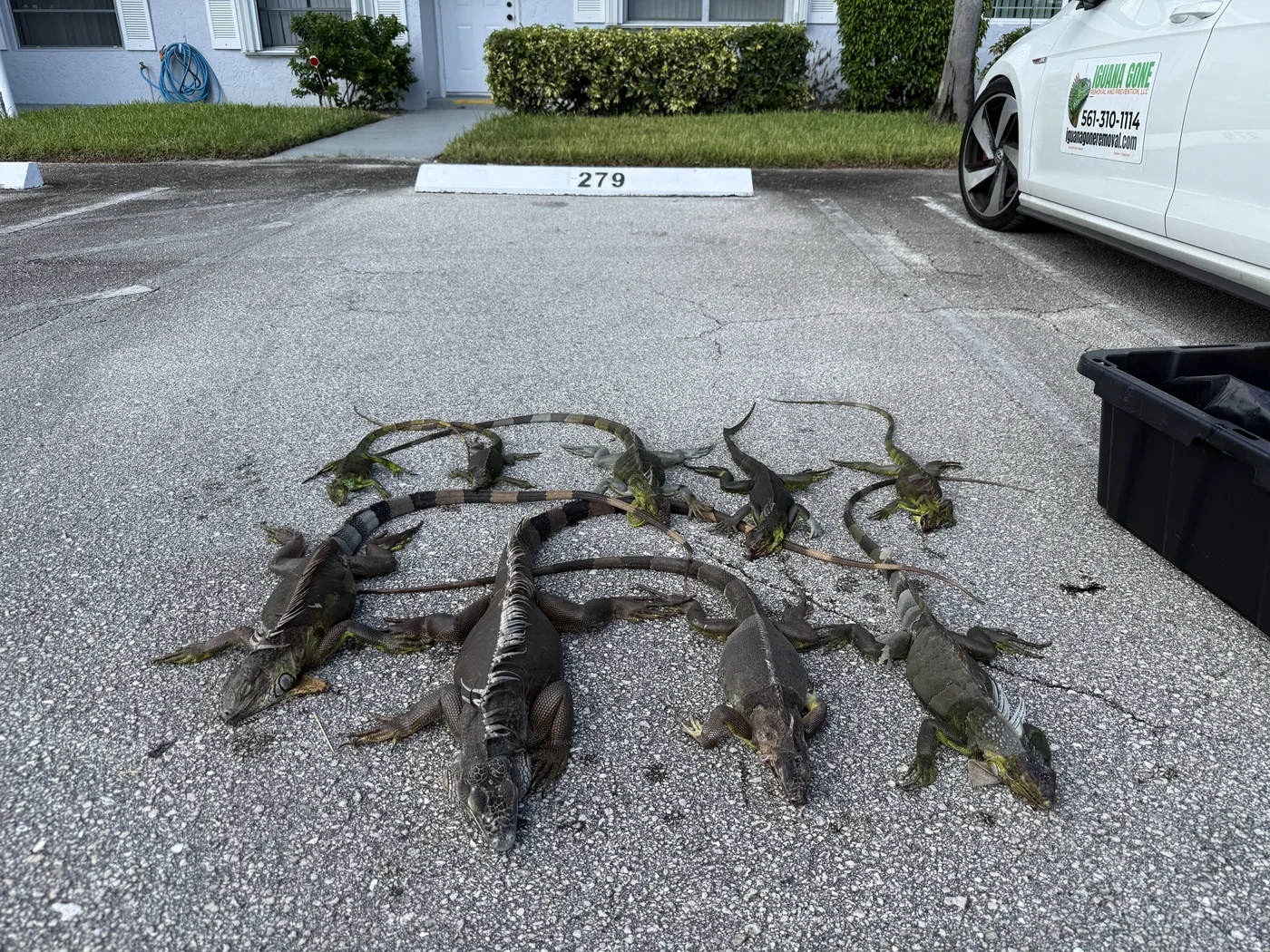
Lake and canal iguana removal for an HOA
Weekly visits under an annual plan support this Delray Beach HOA's lake and canal iguana management. Nine iguanas were removed from the community.
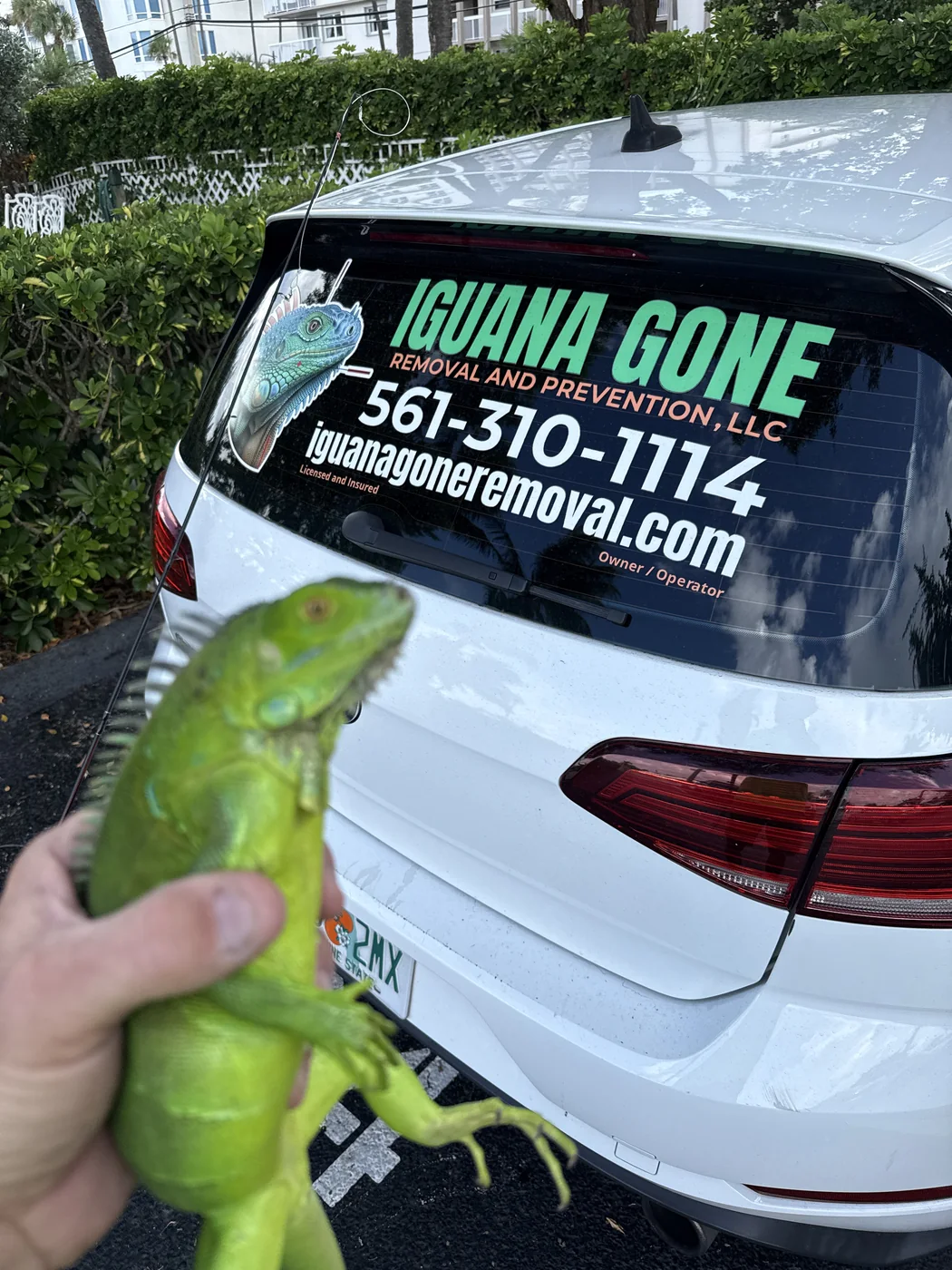
Juvenile iguana captured at a condominium marina
This Hillsboro Beach condominium and marina HOA had iguana activity in the marina and pool area. A juvenile iguana was caught with a snare pole in the marina.
Results vary by property, activity level, and site conditions. Ongoing service does not guarantee iguanas will not return.
When One-Time Removal Is Not Enough
Iguanas every week, multiple iguanas around the same lakes or canals, burrows near seawalls or slopes, droppings in common areas, landscape damage, residents submitting repeat complaints, maintenance staff seeing the same activity areas, baby iguanas after hatching season, or board members asking for a more consistent solution — when the same issue keeps coming back, the community may need scheduled control instead of occasional removal.
What a Sample HOA Iguana Control Report Looks Like
After every visit, the board and property manager get a written record — not just an invoice. A typical monthly report includes the service date and approximate time on-site, the number of iguanas removed, the specific areas serviced (lakes, canals, seawalls, clubhouse, pool deck, named buildings or addresses), activity level by zone so the board can see hot spots versus quiet areas, new or active burrows noted with location, photos when available, resident complaint areas that were addressed, and recommendations for the next visit. This gives the board a paper trail it can reference at meetings and show residents who ask what is being done.
What Board Members Receive After Each Visit
The report is sent to the property manager or designated board contact after the visit, so management is never guessing whether service happened. We can deliver it as a simple PDF or email summary and match the format your association already uses for vendor reporting. Over a service agreement, these reports build into a season-long record the board can use at budget time — showing how activity trended, which zones improved, and where pressure is still needed.
How We Map Lake-Bank and Canal Routes
In most communities the waterfront is where iguanas concentrate — lake banks, canal edges, and seawalls are prime basking and burrowing habitat. On the first visits we walk and note each lake bank, canal run, and seawall section, marking burrow openings, repeat basking spots, and travel routes. From there, every visit covers the same shoreline in the same order. That consistency makes activity comparable from visit to visit and makes sure no stretch of waterfront gets skipped while attention drifts to the last complaint.
How Resident Complaints Are Handled
Residents report sightings to management the way they report any community issue. Management forwards the complaint areas to us, and we add those locations to the route as priority zones for the next visit. Each one is noted in the visit report so the board can see the complaint was addressed. By default we coordinate through the manager rather than taking direct resident calls, which keeps communication consistent and keeps the board in control — though we can set up a direct line for residents if the board prefers.
Weekly vs. Biweekly vs. Monthly Control
There is no single right schedule. Weekly fits large communities with multiple lakes or canals, heavy pressure, active nesting season, or high complaint volume. Biweekly fits mid-size communities with moderate, ongoing activity. Monthly fits smaller associations, or communities holding ground after activity has been reduced. Seasonal service ramps up during nesting and hatching season. Many communities start at a higher frequency to break the pattern, then step down to a maintenance schedule.
Trap-Only and Restricted-Method Communities
Some communities cannot use every removal method — dense condo grounds, properties near schools, and associations with their own rules may not allow air rifles on common areas. In those communities we run a trap-forward program using live traps, pole snares, nets, and hand-catching where conditions allow. It can take steady pressure over more visits to get the same result, but it keeps the work within the community's rules and safe around residents. We confirm what is and is not allowed before service begins.
Vendor Approval: COI, W-9, and LCAM Coordination
We onboard the same way any approved community vendor does. We provide a certificate of insurance (COI) and can name the association or management company as additional insured where your documents require it, supply a W-9, and provide a written scope and price the board can review and vote on, plus a sample of what reporting will look like. For scheduling, gate codes, and access, we coordinate directly with the LCAM or property manager.
Condo, Townhome, 55+, and Gated Community Differences
"HOA" covers very different communities. Condo associations have shared pool decks, courtyards, and retention ponds with residents close by, and often need quieter, trap-and-snare-forward methods. Townhome communities have shared landscaping strips, fence lines, and small common lakes. 55+ active-adult communities have high resident visibility and complaint sensitivity along walkways and common landscaping. Gated communities and master associations have multiple lakes, large common areas, and formal vendor approval plus gate-access coordination.
Pricing
HOA iguana control pricing depends on the size of the community, number of lakes or canals, common-area footprint, linear feet of lake bank or canal frontage, gate and access conditions, service frequency, and the level of existing iguana pressure. Plans may include weekly, biweekly, monthly, seasonal, or custom property-specific service. A small condo association does not need the same plan as a large gated community with multiple lakes.
For the broader commercial recurring hub see Commercial Iguana Control. For audience-specific recurring service for golf properties see Golf Course Iguana Control. For one-time commercial visits see Commercial Iguana Removal. For larger established colonies see Commercial Multi-Day Removal.
Call (561) 310-1114 for a property-specific estimate. Same-day availability across Palm Beach & northern Broward Counties.